
Embodied Insanity
British construction policy is shifting from domestic bricks to imported wood, all on spurious grounds of reducing embodied carbon

Net Zero is often associated with energy policy, but it is truly a whole-of-society effort. One of the major fronts in the war on carbon is the establishment of regulatory standards that minimise embodied carbon across new homes. The focus on ‘embodied carbon’ in new builds has implicitly led to the prioritisation of timber over masonry (including concrete and brick) in construction.
‘Embodied carbon’ can refer to all non-operational carbon emissions. It also relates to building materials – i.e. everything in the chart below except modules B6, B7, and D. In practice, however, it tends to refer to ‘upfront’ emissions associated with construction products and the construction process (modules A1-A5).
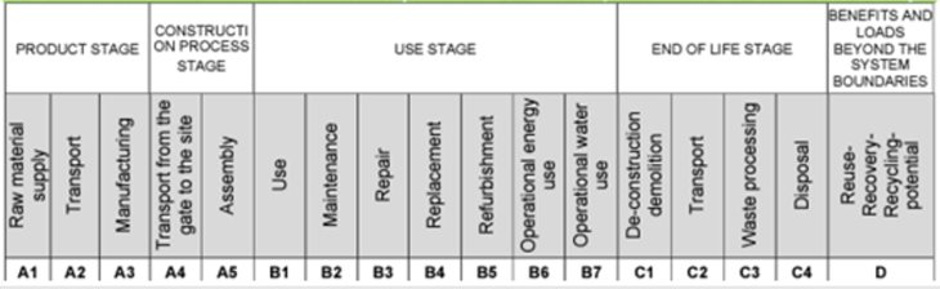
Figure 1: Embodied carbon table (A1-D)
Whole-life carbon is a more comprehensive measurement and includes all of the above modules A-C, covering both operational and embodied carbon emissions associated with a building’s life.
Where does the UK government currently stand? The building regulations currently only cover operational emissions from energy use (B6 above). There is, however, a long-running effort to incorporate both whole-life and upfront embodied carbon into the Building Regulations, in a campaign known as Part Z.
The Part Z campaign was most recently discussed in Parliament by Green MP Ellie Chowns, who pointed out that many local authorities across the country already incorporate embodied carbon into their planning policies. Among these are the Greater London Authority, Bristol City Council and Westminster City Council. The Labour Government has, to its credit, resisted the campaign thus far.
While central government is so far resisting Part Z, local and regional governments are being much more proactive. The Welsh government has its own Timber industrial strategy, and the Scottish government recently invested £20 million in a new tree nursery.
Meanwhile, DEFRA has had a long-standing policy of advocating the use of timber over other construction materials on embodied carbon grounds, most recently via the Timber in Construction Roadmap.
But it is not clear that timber-built homes are markedly less carbon-intensive than masonry.
A report released in 2025 by the Future Homes Hub outlines that the whole-life carbon difference between masonry and timber framing is marginal. The whole-life carbon intensity of a detached timber frame house is 696 kg of CO2 per square metre, versus 711-713 kg for a masonry-based alternative.
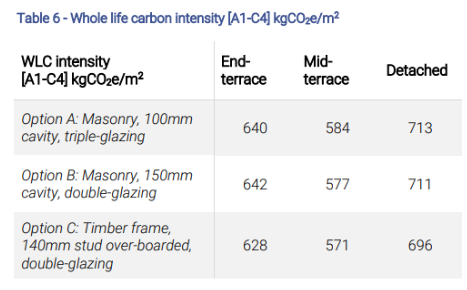
Figure 2: Whole-life carbon intensity for masonry and timber-based housing. Source.
There is also the matter of recycling. Timber-based building products are often ‘treated’ to reduce their flammability, which can make them difficult to recycle. Concrete and brick, by contrast, are relatively easy to recycle as crushed aggregates.
So why is wood being preferred by authorities and campaigners? One reason is arbitrary assessment times. While the government has not yet incorporated whole life calculations into building regulations, non-governmental organisations have stolen a march on the authorities. These assessment standards for buildings typically use a 60-year reference study period (RSP), over which embodied and operational carbon emissions are assessed. The most influential standard is the Royal Institute of Chartered Surveyors’ (RICS) Whole Life Carbon Assessment standard. RICS does, in its 2024 edition, say for domestic projects an envelope assessment for 120 years should also be completed, but according to a 2025 Create Streets report, this has no weight in the formal standards. The 60-year timeframe is the industry norm.
As the Create Streets report describes, the arbitrary 60-year assessment time for carbon emissions disadvantages bricks, which can last for well over 150 years, and privileges timber, which generally needs more maintenance after 60 years. Because brick buildings are given less time to depreciate their carbon than their likely lifespan, they are disadvantaged.
Architects and developers increasingly report discussions with development control officers in which conventional masonry construction is discouraged on embodied carbon grounds.
Hollowing out
One reason why we might not intervene to make more homes timber-based is industrial competitiveness. The UK was the second-highest net importer of wood products in the world, importing 81% of its timber in 2021. In 2023, we were the third-largest net importer, behind only the U.S. and China. Domestic production meets just 20% of annual wood consumption in the UK. Efforts by DEFRA and the devolved administrations to address this by planting more trees will not bear fruit for decades.
By contrast, British aggregates, cement and concrete production are overwhelmingly domestically produced. Cement, a binder made from heated limestone and clay, is largely domestically produced, although as shown below, imports are becoming a greater share of sales due to declining production capacity and high energy costs.
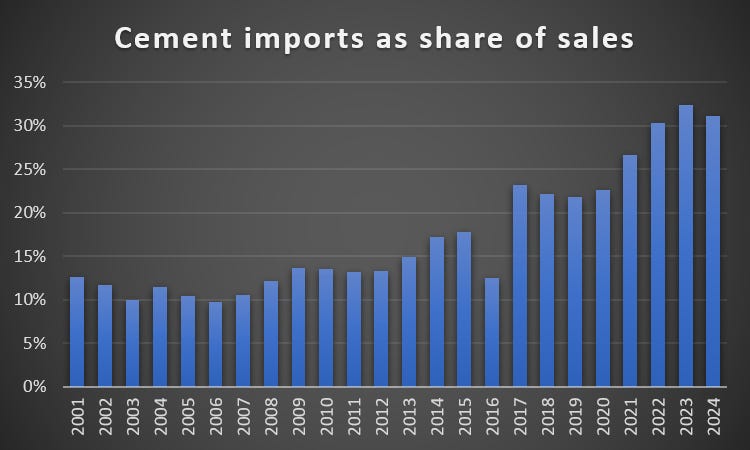
Figure 3: Cement imports as share of sales. MPA via Construction building materials: commentary June 2026
For brick and concrete block production, domestic capacity, though declining, remains relatively strong. In 2025, we produced around 1.5 billion bricks, exported 17 million, and imported 352 million. Based on some preliminary data, we have capacity for around 2.2 billion bricks a year, far down from roughly 7.8 billion in 1970. Capacity is dominated by three companies.
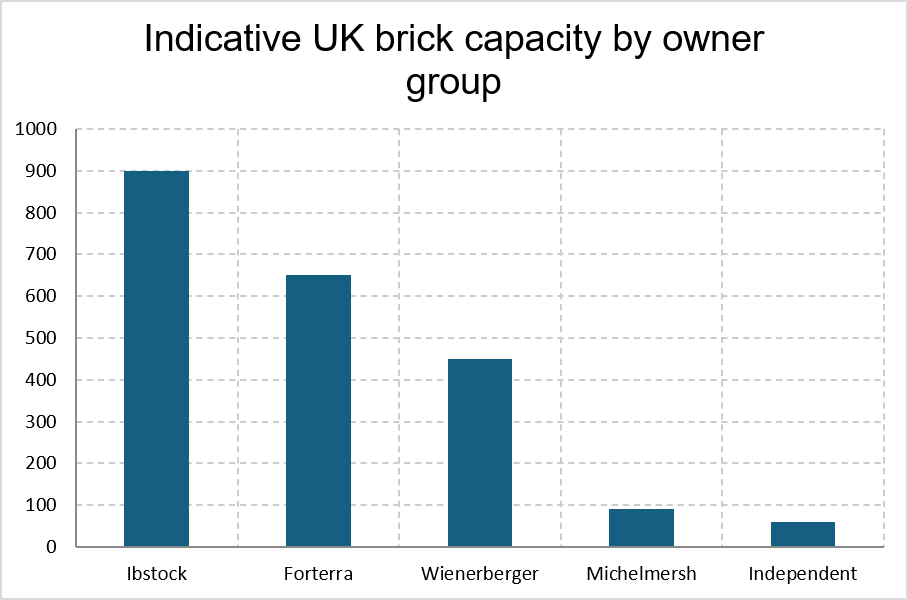
Figure 4: Brick (millions) capacity by owner across 48 sites. Own research.
As can be seen below, domestic brick production is falling as a share of deliveries.
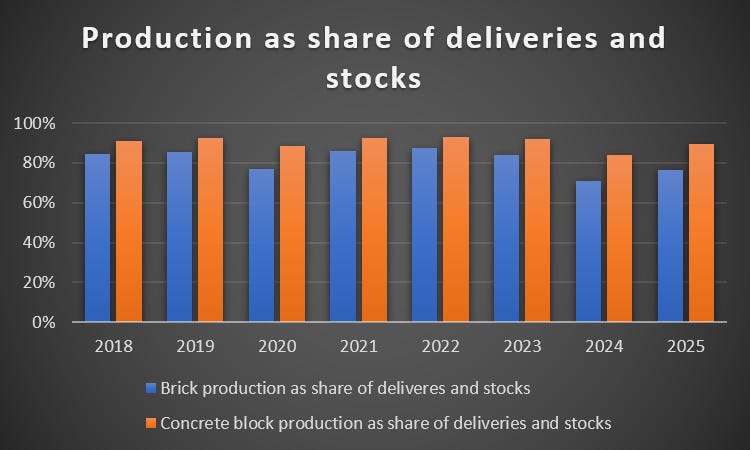
Figure 5: MPA via Construction building materials: commentary June 2026
When brick, concrete block and cement production are all nearly covered by domestic capability, why would we make a conscious effort to deprioritise them in favour of a supply chain we have very limited control over? Given brick production is energy-intensive, it would be foolish to reduce demand further. Since 2007, brick deliveries have been declining alarmingly.
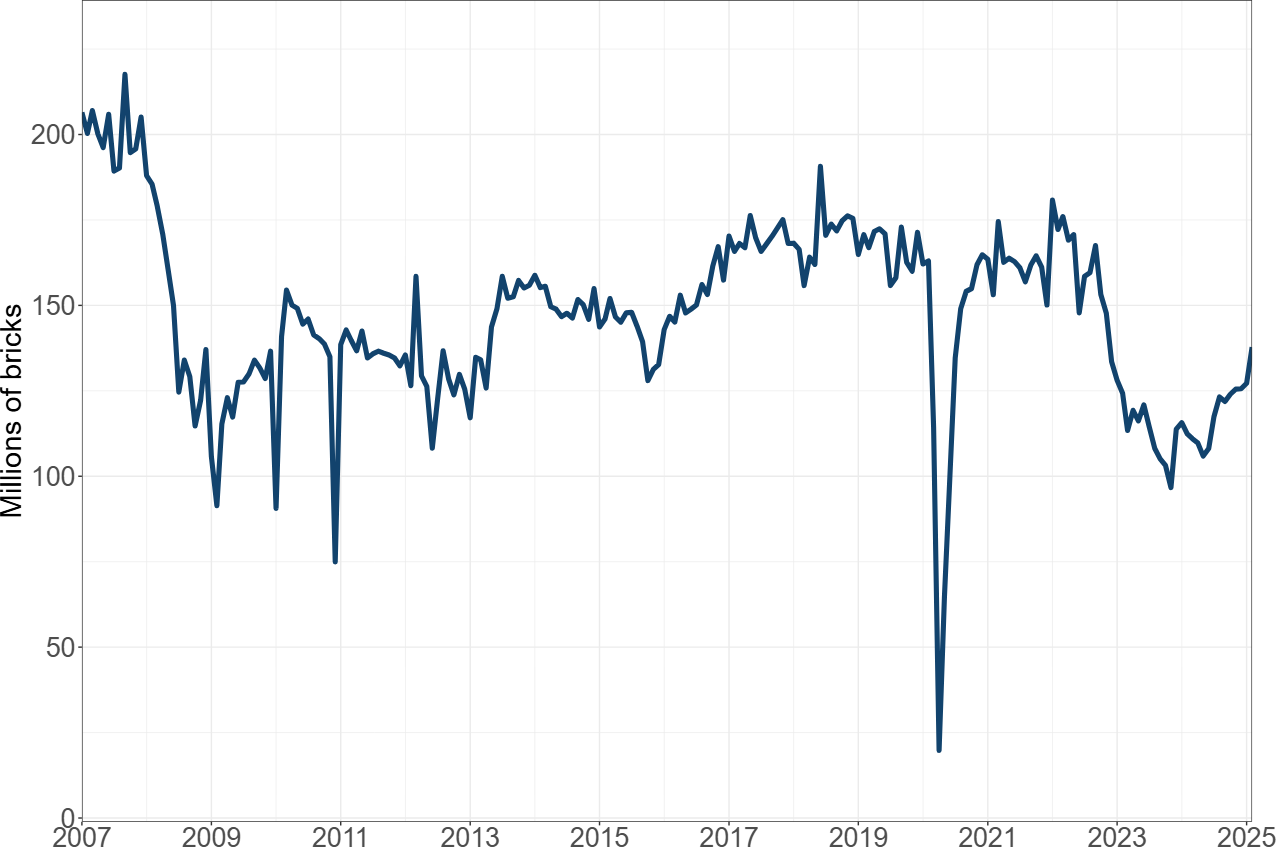
Figure 6: Seasonally adjusted deliveries of bricks, GB. Source.
Without irony, Labour MP Adam Jogee has argued for the Sec of State to find ways to promote British brick production over imports. At no point does he mention sky-high energy costs, the failure to tackle the planning system, or the increasing bias towards timber.
Besides not wanting to crash the brick building industry, we could also argue that brick buildings are desirable and popular with the public. Around 70% of new buildings in the UK still use brick facades. Visual preference surveys consistently find brick facades to be more popular than those of other construction materials. Bricks, assuming they are not imported, connect houses to their underlying geology. In my home town of Folkestone, the Kentish gault clay provides pale bricks. When I was in Sheffield, the iron-rich clay makes for stronger reds and purples.
We are prioritising one construction material over another we rely heavily on imports for. We are pushing for uglier homes and building industrial strategies around low-value-added sectors so that we might marginally reduce our less than 1% share in global carbon emissions. And even on its own terms, the prioritisation of timber won’t meaningfully reduce embodied carbon.
This institutional bias is not acknowledged or explicit, and does not come from central government. Rather, it is being embedded by a mixture of industry standards, parliamentary consultations and local government initiatives. It is embodied insanity.